Best Diving Sites in Europe | RatePunk
You undoubtedly appreciate Europe's majestic landscapes and rich heritage, but have you ventured into the depths that adorn Europe's seascapes? This is no ordinary aquatic realm – it's a diver's haven. Whether you're drawn to the captivating narratives whispered by shipwrecks or the vibrant tapestry woven by marine life, Europe stands as an unrivaled diving destination.

By Eglė
Published: September 1, 2023 • 11 min read
Updated: September 14, 2026
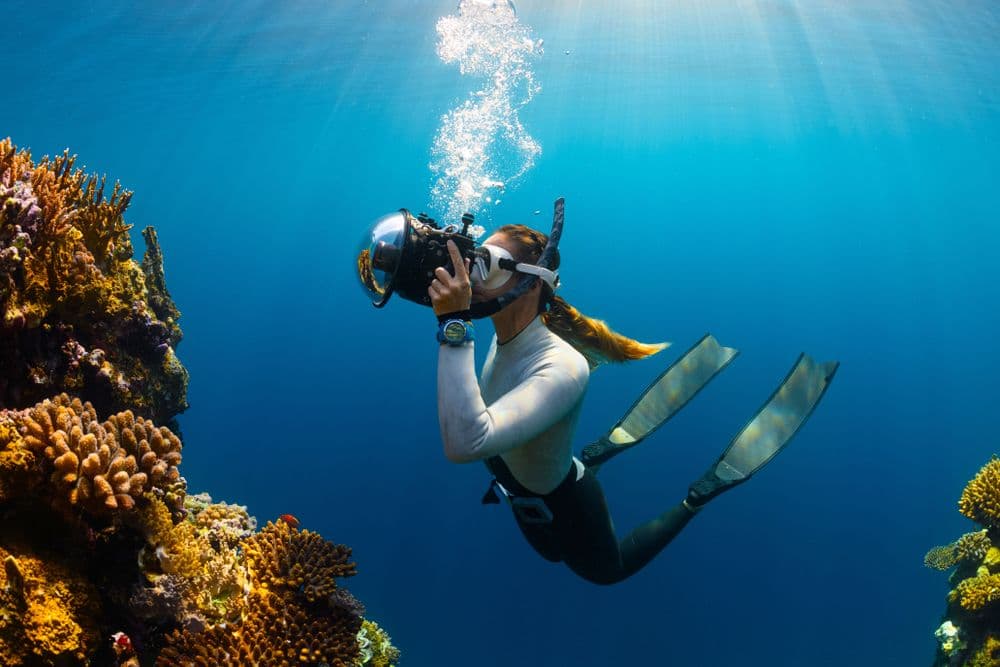
Europe has wrecks, walls, and one fissure where you swim through meltwater so clear it barely registers as water. Some of it is open to anyone with an Open Water card. Some of it is not, and the difference is the depth.
One rule decides the shape of the trip before anything else: leave a full day between your last dive and your flight home. Let’s look at what each site is, how deep it goes, who can dive it, and when it is worth going.
ICELAND: Silfra Fissure & Thingvellir National Park
Silfra is a crack between tectonic plates inside Thingvellir National Park, filled with glacial meltwater that has spent decades filtering through lava rock. Visibility runs to about 100 meters, which is roughly as clear as water gets. You walk in from a platform and drift the length of the fissure to a lagoon.

- Depth - 18 meters, and that is a hard cap set by the park rather than a guideline. Most of the dive sits between 7 and 12 meters, though the fissure itself drops to about 60.
- Who can dive it - an Open Water certification plus either a dry suit certification or ten logged dry suit dives in the past two years, confirmed in writing by an instructor. Minimum age 17, a signed medical statement for everyone, and a doctor’s note if you are over 60. Diving alone is banned, and a guide takes no more than three divers at a time.
- Season - all year. The water sits at 2 to 4 degrees Celsius every month and never freezes, so the season changes the surface rather than the dive. May and September are the practical sweet spots, when the roads to the sites are open and the crowds are thin.
- The catch - the rules are this strict because several people have died here. After two snorkelers died within a month of each other in 2017, Iceland tightened certification, cut group sizes, banned wetsuits for divers, and required health declarations. Cold water on your face and hands is the part most visitors underestimate.
If you want more than one dive in Iceland, Davidsgja is the other site inside the park, entered from the shore of Lake Thingvallavatn and dropping to about 21 meters. Strytan, up north in the Eyjafjordur fjord near Akureyri, is a hydrothermal chimney rather than a lake: a 55-meter cone built over 10,000 years by 72-degree fresh water venting into cold seawater, rising from around 65 meters to within 15 meters of the surface. It is the only one shallow enough to dive anywhere in the world, and it needs advanced certification and good buoyancy because the current runs hard.
MALTA: P29 & Anchor Bay
The P29 is a 52-meter minesweeper, built in East Germany in 1970, sold to Malta in 1997, and sunk on purpose off Cirkewwa in 2007 to make an artificial reef. It sits upright and intact, which is why it is the wreck most Maltese dive centers put beginners on first.

- Depth - 12 meters at the shallowest point, about 20 at the deck, and 34 to 35 at the seabed.
- Who can dive it - Advanced Open Water or the equivalent. You can reach it from the shore at Cirkewwa with about a ten-minute swim, or go by boat.
- Season - May to October, with September and October being the best: the water is at its warmest, around 26 degrees, and the summer crowds have gone. January to March has rough surface conditions.
- The catch - anything on Malta’s seabed that is at least 50 years old is protected by law, so on the older wrecks there is a strict look but don’t touch, with no penetration and no anchoring.
Anchor Bay, near Mellieha, is at the other end of the scale. It is a rocky inlet rather than a beach, entered from a concrete jetty with ladders, and it tops out at 10 to 12 meters. That makes it the place Maltese schools use for try-dives and training, and the fallback when a northeasterly closes everything else. Its main feature is Scorpion Cave, a large cavern with an air pocket in the roof. The film set on the bay is Sweethaven, built for Popeye, the 1980 musical comedy Robert Altman directed with Robin Williams in his first film role. It is a paid theme park now, and it does not block the dive.
Malta’s aviation wrecks are the ones travel articles reach for, and they are the ones most readers cannot dive. The Blenheim Bomber, a British bomber ditched off Xrobb l-Ghagin in December 1941, lies at 42 meters. That is past the 40-meter recreational limit, so it is a decompression dive needing technical certification rather than an ambitious day out. If you want a big wreck at a depth your card covers, the Um El Faroud at 34 meters is the one to ask for.
CYPRUS: The Zenobia
The Zenobia is a 172-meter roll-on roll-off ferry lying on her port side in Larnaca Bay, about two kilometers offshore. She capsized on June 7, 1980, on her maiden voyage from Sweden to Syria, after a fault in her computerized ballast system pumped water into the wrong tanks. Nobody died. More than a hundred lorries are still strapped to her decks.
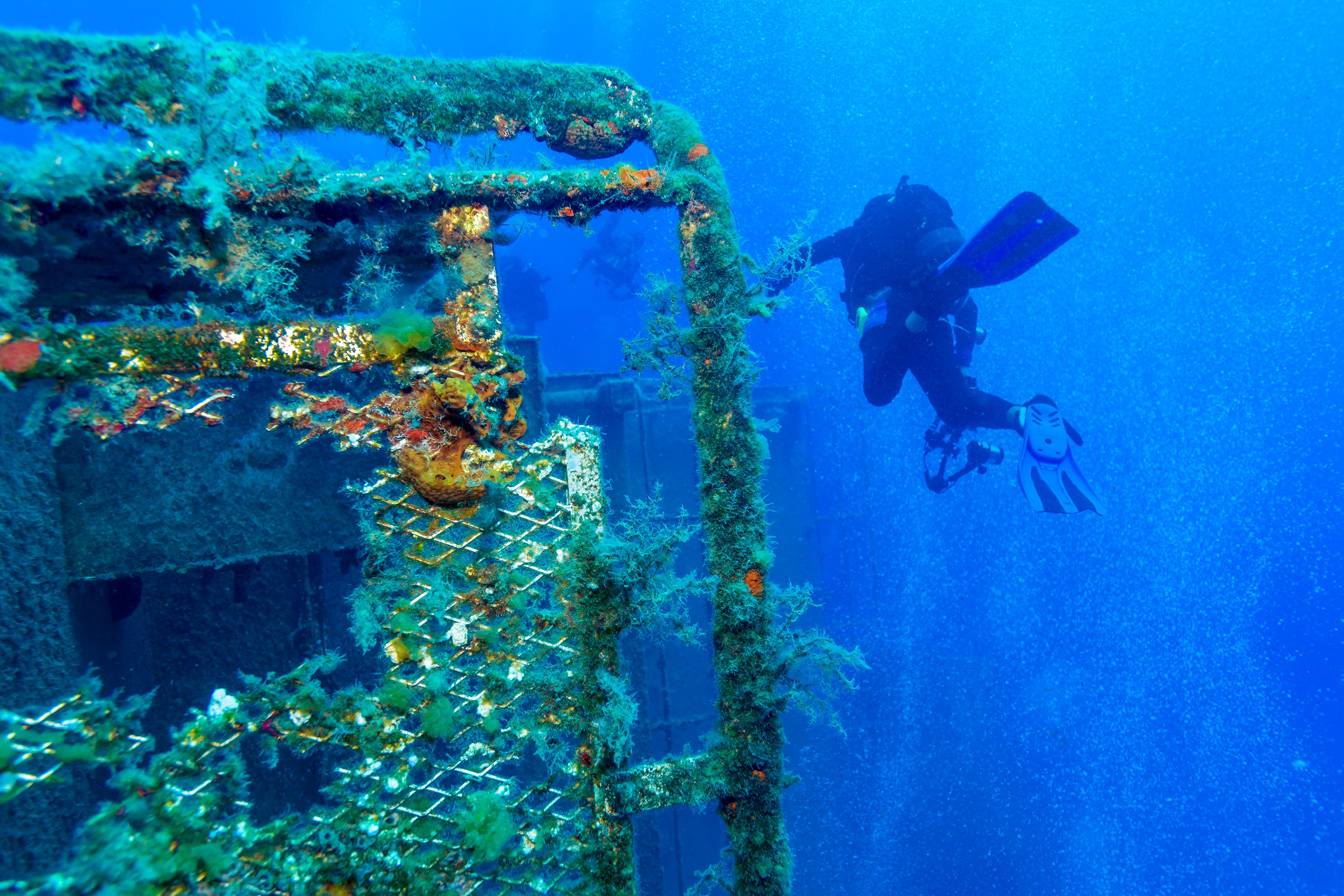
- Depth - 16 to 18 meters at the starboard side, which is now uppermost, down to about 42 meters at the seabed.
- Who can dive it - Advanced Open Water at every operator, and most want Deep Diver and nitrox for the better routes. Going inside, which is what people come for, needs wreck or technical training, twin cylinders, and a guide. Boat access only, and pricing for that runs about €90 for a two-dive trip from Larnaca.
- Season - all year, with May and June and then September and October the best windows. Visibility runs 20 to 30 meters most of the year. The water is 26 to 28 degrees in high summer and 16 to 17 in February.
- The catch - at least six divers are believed to have died on this wreck, most of them inside it. An instructor died in October 2023 and was found the following morning in a section few people visit. The outside of the Zenobia is one of the great dives in the Mediterranean; the inside is a technical dive that keeps killing experienced people.
ENGLAND: Eddystone Reef
The Eddystone is a set of rocks twelve miles southwest of Plymouth, marked by a lighthouse, with the stump of Smeaton’s 1759 tower still standing beside the current one. Underwater there are walls and gullies covered in jewel anemones, dead man’s fingers, sponges, and pink sea fans in better condition than almost anywhere else in English waters.

- Depth - from the rocks, which dry at low water, to 40 meters and more on the drop-offs. The north side goes past 50.
- Who can dive it - BSAC Sports Diver or the equivalent, which is roughly Advanced Open Water with a deep qualification and rescue skills. Boat only, on a hardboat charter out of Plymouth or a RIB, about forty minutes each way.
- Season - divable all year in calm weather, May to October is best. The sea runs from about 9 degrees in March to 17 in August, so this is usually a dry suit dive rather than a wetsuit one.
- The catch - slack water only, which is 2-2.5 hours after high or low water at Devonport. During spring tides there is no other option; on neaps you get a wider window. Outside slack, the tidal stream makes it a near impossible dive.
There is a large iron anchor on the reef with flukes about five feet across, and nobody has dated it. If you are after a wreck with a documented history, HMS Coronation went down off Penlee Point in 1691, but it is a protected wreck and diving it without a license is a criminal offense.
TURKEY: Canyon, Kas
The Canyon at Kas is a winding passage between two walls, thick with invertebrate life, and it is the site everyone dives first. The Dimitri, known locally as the Cotton Wreck, is the other one: a steel coaster that struck the islands in 1968 and went down with a cargo of cotton, bales of which are still scattered across the bottom.

- Depth - the canyon itself runs to about 20 meters, with the site bottoming out near 32. The Cotton Wreck sits between 27 and 42 meters, so the deep end of it is past recreational limits.
- Who can dive it - the canyon suits an Open Water diver with a guide. The wreck needs Advanced Open Water at least, and a plan that keeps you off the deepest part unless you hold technical certification. All Kas diving is boat diving from the harbor.
- Season - April or May to November, with the water at 28 degrees in August and around 25 in October. May and the early autumn are the warm, quiet months.
- The catch - Turkey requires foreign divers to go with a licensed local guide through a registered center, and diving is banned outright in military zones and at protected archaeological sites. Kas sits in the middle of both: the Uluburun Bronze Age wreck was found here, and operators run a legal replica site instead because the real one is off limits.
Kas is one of the last strongholds of the Mediterranean monk seal, which is down to somewhere under a thousand animals worldwide. Sightings happen and they are luck rather than an itinerary item. Turkish law forbids entering, lighting, or waiting outside the sea caves the seals shelter in, and a reputable Kas operator will not take you near one.
CROATIA: Fortunal, Vis Island
The Fortunal is a wooden fishing boat, built in Italy in 1995, that hit the coast of Vis near Oklucna on April 10, 1997 and sank within minutes. It is an artificial reef now, and the wall it sits against is as busy as the wreck itself.

- Depth - about 37 meters at the superstructure, 52 at the sand. That puts the whole dive past Croatia’s 40-meter recreational limit.
- Who can dive it - technical certification with staged decompression, not an advanced recreational card. At 50 meters you are on a mandatory deco schedule, in water that sits at 16 to 18 degrees below the thermocline whatever the month. Operators also warn against going inside, because the hull is wood and nobody knows when the deck gives way.
- Season - May to October, with September and October the best of it. The surface is 22 to 25 degrees in high summer, which is not what you will be diving in.
- The catch - two pieces of paperwork. Every foreign diver in Croatia needs a diver’s card from the Croatian Diving Federation, which costs about €15, lasts a year, and your dive center issues it against your passport. And Vis and Bisevo sit inside a special authorization zone, a legacy of Vis being a closed Yugoslav military island until 1991, so you dive with a registered Croatian center rather than independently.
There is a cave on this site, and it is not where you would expect. It is a fifty-meter tunnel through the coastal rock with stalactites from when it was dry land, entered at six meters and rising to three, and divers swim it during the decompression stop on the way up.
Before You Book the Flight Home
Nitrogen takes hours to leave your body after a dive, and an aircraft cabin sits at the pressure equivalent of six to eight thousand feet, where what is left can form bubbles and cause decompression sickness. The Divers Alert Network sets a minimum of 12 hours after a single dive with no decompression stops, and 18 hours after several dives in a day or several days of diving. After any dive with decompression stops it advises substantially longer, and both PADI and BSAC say at least 24 hours.
Those minimums come from resting volunteers in a dry chamber, and DAN says plainly that meeting them does not guarantee you will be fine. So wait a full 24 hours after your last dive. Build this time into the itinerary: make the last day of the trip a land day.
In that same vein of thought, driving over a mountain pass counts as going to altitude too, which matters on the Croatian and Turkish coasts where the road inland climbs fast.
If you get joint pain, unusual tiredness, tingling, weakness, dizziness, or a rash after diving, call the DAN Europe emergency hotline and get assessed.
Published: September 1, 2023
Updated: September 14, 2026