Fun Facts About Sweden | Ratepunk
Sweden, the enchanting Nordic nation known for its stunning landscapes, rich history, and innovative spirit, is brimming with intriguing and delightful surprises. Beyond its iconic meatballs and ABBA, Sweden has many fascinating fun facts that unveil its culture, society, and achievements.
By Eglė
Published: May 17, 2023 • 8 min read
Updated: September 14, 2026
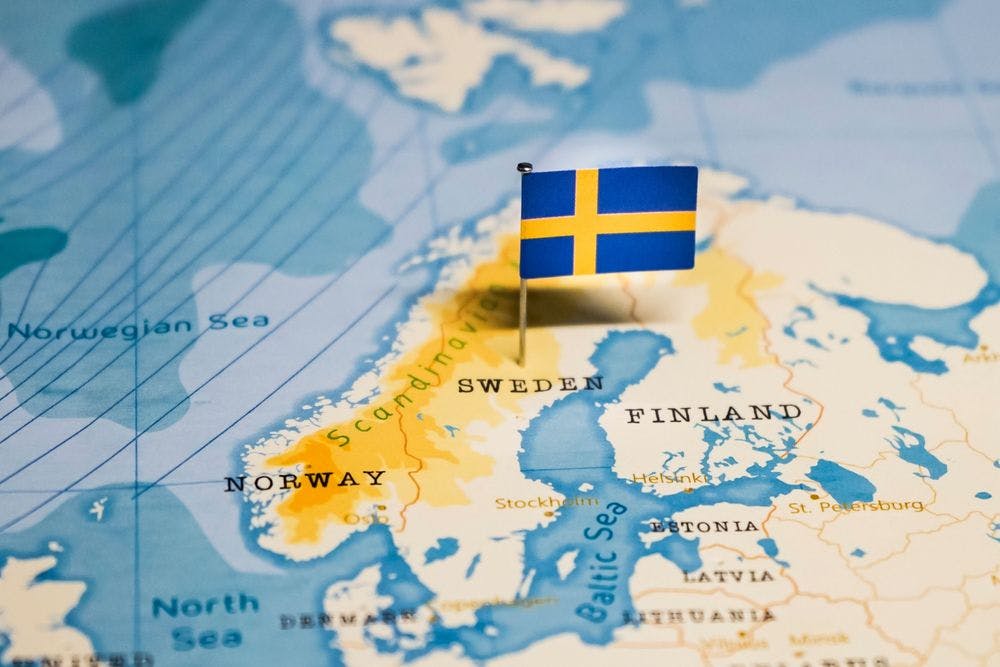
Sweden turns up in more listicles than almost any country in Europe, and a surprising amount of what they say about it is wrong. It does not have the longest coastline in Europe. It does not recycle 99% of its waste. Its meatballs almost certainly did not come from Turkey.
The true versions are better, and several of them are things you can go and check out if you decide to take a trip.
In this list, we’ll walk you through all the interesting things you need to know about Sweden.
1. Sweden Imports Waste
Sweden burns household waste to heat homes, and it does not produce enough of it to keep the plants running. So it buys the rest. In 2024 Swedish energy recovery plants took 2.5 million tons of sorted waste from other European countries, mostly the UK, Norway, and Italy, and were paid to take it, because landfilling costs those countries more than shipping it north.
The part that gets mangled in the retelling is the recycling. Burning waste for energy is not recycling, and Sweden recycles 40% of its household waste by material, against an EU average of 49%. The impressive number is the other end: under 2% of household waste goes to landfill.

2. Donald Duck for the President!
Donald Duck, known as Kalle Anka in Sweden, has outsold Mickey Mouse there since the 1930s, and Kalle Anka & C, the Swedish Donald Duck comic, went on to become the country’s best-selling comic.
The election story is even stranger. Swedish polling stations provide blank ballots alongside printed ones, allowing voters to write in a party name. For years, a small number of voters wrote in Kalle Anka-partiet, literally the “Donald Duck Party.” It peaked in 2006 with 223 votes.
3. The Nobel Museum
The Nobel Prize Museum sits on Stortorget, the main square in Stockholm’s Gamla Stan. The museum explores the history of the Nobel Prize, Alfred Nobel, and the people whose work has earned one of the world’s most famous awards. It took its current name in 2019 and is expected to remain at Stortorget until the new, purpose-built Nobel Center at Slussen opens in 2031.
A visit also helps clear up a common misconception about the Nobel Prizes. They are not all awarded in Sweden. Alfred Nobel’s will assigned the Peace Prize to a committee appointed by the Norwegian parliament, which is why it is awarded in Oslo. The economics prize has a different history. It was not included in Nobel’s will but was established by Sweden’s central bank in 1968.
The other four Nobel Prizes are decided in Stockholm and presented on December 10, the anniversary of Alfred Nobel’s death.
Visiting: Entry costs 160 SEK and includes a guided tour. The museum is closed on Mondays.

4. Instead of an Art Gallery, check out Stockholm’s Metro
Ninety-four of Stockholm’s hundred metro stations have art in them, by more than 250 artists, going back to 1957 when the city decided its new underground should not look like a tunnel. Region Stockholm calls it the world’s longest art exhibition, which is its own claim, but a few stations make the case on their own.
- Kungsträdgården - a green grotto assembled from the salvaged stonework of demolished Stockholm palaces.
- Solna Centrum - a blood-red sunset over a spruce forest, painted in 1975 as a protest about rural depopulation.
- T-Centralen - the blue cave of vines and workers’ silhouettes, where the whole program started.
- Stadion - a rainbow across a blue cave, in the colors of the 1912 Stockholm Olympics.
A single ticket is 43 SEK and a 24-hour pass is 180 SEK, which covers as much of it as you can manage in a day. Spårvägsmuseet runs guided art tours in English from May to September for 150 SEK on top of a valid ticket.
5. It’s Fika Time
Fika is coffee and something sweet, eaten with other people, usually twice a day. The word is 19th-century back-slang, the syllables of kaffi turned around. Nothing about it is law: Swedish working time rules cover rest breaks, not coffee, so a paid fika comes from a union agreement or the employer rather than the statute book. The habit is real enough without it. Swedes drink more coffee per head than almost anyone except the Finns, and a coffee and a sweet roll in central Stockholm runs about 87 SEK.

6. The Icehotel
The Icehotel at Jukkasjärvi, 17 kilometers outside Kiruna, was the first of its kind in 1989. It is still rebuilt every November and December out of ice cut from the Torne River and left to melt back into it in spring. Since 2016 there has also been a permanent half, Icehotel 365, held at minus five degrees all year by solar panels running on the sun. You sleep on a block of ice under reindeer hides in an expedition sleeping bag. A day visit to see the art suites is 325 SEK.
Kiruna itself is being moved, building by building, because the iron mine underneath is sinking the ground it sits on. The church, all 672 tonnes of it, was towed five kilometers in August 2025.

7. Famous Surströmming
Fermented Baltic herring, and the story about it usually starts in the wrong century. Sweden had salt shortages in the 1500s, and that is when surströmming spread as something people traded. But Swedes were fermenting fish about nine thousand years before that: a pit in Blekinge holding 200,000 fish bones dates to roughly 7,200 BC, the oldest known evidence of fermentation anywhere.
Until 1998 the law controlled the day cans of it could be sold, the third Thursday in August, and the trade still keeps to it. Open the tin outdoors, ideally underwater in a basin, and eat it rolled in thin bread with almond potatoes and raw onion.

8. Get Ready For a Tasty Twist of History!
Swedish meatballs came from Turkey, brought home by King Charles XII after five years of exile in the Ottoman Empire. Sweden’s own official accounts confirmed this fact in 2018.
Swedish food historians do not believe it. Richard Tellström of Stockholm University calls it fake news and points at the documents: frikadeller appear in Swedish writing from 1650, more than fifty years before Charles XII ever reached Ottoman territory, and the word köttbullar turns up in 1755 with nothing tying it to the king. The same goes for the cabbage rolls. What he plausibly did bring back was a taste for coffee, which is a smaller claim and a better-supported one.
9. Many Many Islands
Sweden has 267,570 islands, counting anything above nine square meters, which is more than any country in the world except Norway. Count every lake edge and island shore and the total shoreline comes to roughly 424,000 kilometers, about ten times around the Earth.
The Stockholm archipelago holds around 30,000 of those islands, spread 80 kilometers out into the Baltic, and the Waxholmsbolaget ferries leave from Strömkajen in the middle of the city: Vaxholm in an hour, Sandhamn in three. What makes them worth the day is allemansrätten, the right of public access, which lets you land on almost any of them, swim, pick berries, and sleep out, provided you stay about 70 meters from anyone’s house and leave nothing behind.

10. Midnight Sun
Above the Arctic Circle the sun does not set for weeks. In Kiruna it stays up for 47 days, roughly May 29 to July 14, and Abisko, further north, gets a little longer. Stockholm is 800 kilometers south of the line and never gets it at all: what it gets in June is about eighteen and a half hours of daylight and a twilight that never quite goes dark.
The same geography runs the other way in winter. Kiruna’s polar night lasts about 27 days, and it is not black but blue, with a bright hour in the early afternoon.
11. McDonald’s on Every Corner
Sweden has around 205 McDonald’s, roughly 19 for every million people. But the menu is the unusual part rather than the count. The McVegan launched in Sweden and Finland in 2017, one of the first fully vegan burgers in any McDonald’s market, and it is still on sale here. The milk, the eggs, and the coffee are organic, and the company says chicken, fish, and vegetarian options now make up 44% of the protein it buys.
Which of These You Can Go and See
Most of them cluster. The Nobel Prize Museum, the metro art, the archipelago ferries, and as much fika as you can drink are all inside Stockholm or an hour from it, which makes a long weekend enough. The Icehotel is a separate trip: fly on to Kiruna, about ninety minutes from Stockholm, and go between December and April for the seasonal building or any time of year for the permanent one.
Timing decides the rest. Midsummer’s Eve falls on the Friday between June 19 and 25 and closes most of the country, which is either the reason to go or the reason to avoid that week. Surströmming reaches the shops on the third Thursday in August.
Fares to Stockholm swing a long way between seasons, and the gap between a good week and a bad one is usually wider than anything you will save once you land.
RatePunk tracks prices out of your home airport and flags the drops, which is the easiest way to let the fare pick the week.
Published: May 17, 2023
Updated: September 14, 2026