
Top 10 Eco Tourism Activities to Do Around the World | RatePunk
Eco-tourism activities are becoming more popular nowadays in order to save and protect the environment. It can also be fun to engage in Eco-tourism activities and make it a part of our travel life. Here is the list of the 10 Top Eco Tourism Activities to Do.

By Amir
Published: September 8, 2023 • 11 min read
Updated: September 14, 2026
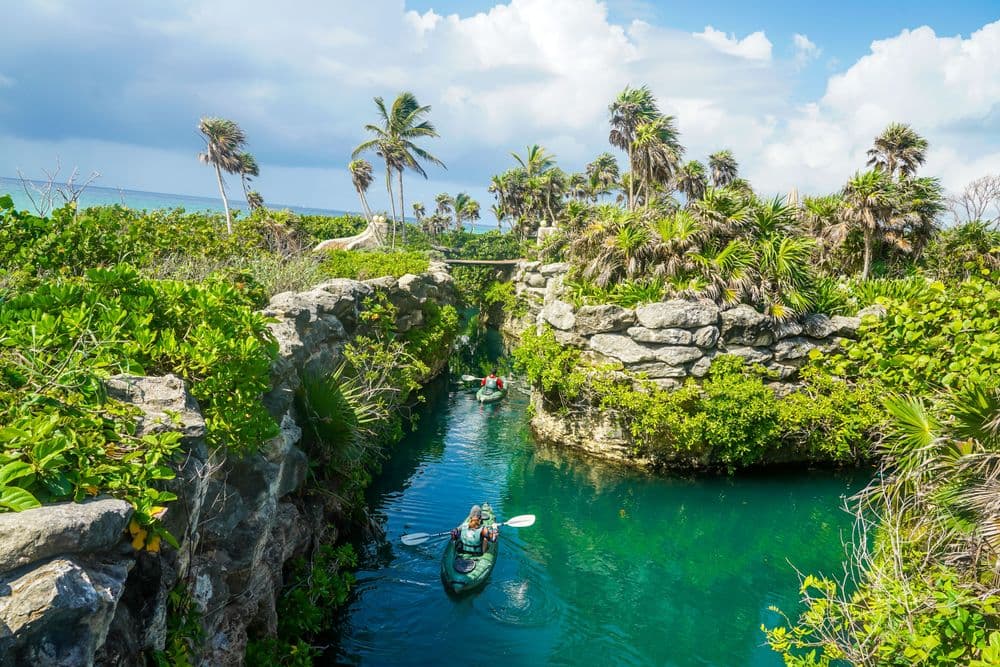
Ecotourism is a defined thing, not a mood. A trip either funds conservation, pays local people, and teaches you something, or it does not. A zipline through a rainforest is nature tourism. So is a snorkel trip. Neither becomes ecotourism because the brochure says eco.
Let’s look at ten activities that can pass that test, where to do each one, and what it takes to get in.
What is Ecotourism?
The International Ecotourism Society defines it as responsible travel to natural areas that conserves the environment, sustains the wellbeing of local people, and involves interpretation and education. Four things separate it from an ordinary nature trip.
- It funds conservation directly - a park fee, a community levy, a conservancy lease. If you cannot see where the money goes, it is going to a tour company.
- It pays local people - somewhere between a tenth and a third of what you spend in a destination reaches local households.
- Someone explains it to you - no guide and no interpretation means no ecotourism. That is definitional, not a nice extra.
- The impact is managed - small groups, capped numbers, rules that are enforced.
The labels are where people get caught. The Global Sustainable Tourism Council certifies nobody: it recognizes standards and accredits certifiers, so “meets GSTC criteria” is a claim about a document anyone can download. Travelife has three tiers and only Certified involves an independent visit. Rainforest Alliance left tourism certification in 2018. Name the certifier, find the certificate on that certifier’s register, and discount anything that is already the law. Booking.com withdrew its own sustainability badge in 2024 after the Dutch regulator found it misleading.
What are the 10 Top Eco Tourism Activities to Do, and Where is the Best Place for These Activities?
1) Wildlife Safaris
A guided drive at dawn and again late afternoon, with a driver who knows where the animals were yesterday.
- Where - Kruger, the Maasai Mara, Ranthambore. Kenya’s private conservancies pay lease fees to more than 15,000 Maasai landowners, so they put more of your money into local hands than the public reserve does.
- What it takes - park fees of roughly $35 a day at Kruger and $100 to $200 at the Mara, depending on season. The Mara is run by Narok County rather than the national parks service, so a KWS booking code will not work at the gate. Ranthambore books 90 days ahead, assigns your zone at random, and closes its core zones July to September.
- The catch - the money helps but does not cover the gap: around nine in ten of Africa’s protected areas holding lions are underfunded.
Tell your driver you want the rules followed. No off-roading, five vehicles maximum at a Mara sighting, 20 meters from any animal.

2) Bird Watching
Slow, quiet, and the cheapest thing on this list. A guide who knows the calls will show you more in a morning than a week of wandering.
- Where - Monteverde in Costa Rica, and Colombia’s Sierra Nevada de Santa Marta, which has more endemic species than almost anywhere.
- What it takes - Monteverde scrapped day passes in December 2025. You book a timed slot on one of three circuits, capped at 26 people, for about $30. In the Sierra Nevada you cannot walk in alone: the trail crosses Kogi land and about nine operators hold permission.
- The catch - the Sierra Nevada closes every year for ritual work led by the Mamos, at dates the indigenous authorities set. Confirm rather than assume.

3) Hiking and Trekking
The lowest-impact way to cover ground, and the one where the permit system decides your trip more than the weather does.
- Where - the Inca Trail, Everest Base Camp, and the Camino de Santiago, which is a network of routes rather than one path.
- What it takes - the Inca Trail is capped at 500 people a day and only about 200 are trekkers. Permits sell through licensed operators only, are locked to your passport, and are released each November for the following year. Everest Base Camp needs two permits totaling under $50. The Camino needs none, but a credencial stamped twice a day over the last 100 kilometers is what gets you the Compostela.
- The catch - the Inca Trail closes for all of February, and the summer permits go within days of release. Nepal requires a licensed guide in national parks, though enforcement in the Khumbu is inconsistent; at 5,364 meters take one anyway.
For European trails instead, our guide to hiking trails in Europe breaks down the long routes, the family hikes, and the treks with exposure.

4) Kayaking and Canoeing
Close to zero-impact travel, and you get near wildlife precisely because you are quiet.
- Where - the Norwegian fjords, the Florida Everglades, Croatia’s Dalmatian coast, and Algonquin Provincial Park in Ontario.
- What it takes - no certification for a guided day trip, and rental plus a guide almost everywhere. Multi-day backcountry routes usually need a permit booked ahead, as in Algonquin and the Everglades.
- The catch - being quiet means you can get closer than you should. Keep away from nesting birds and hauled-out seals, and check the tide and wind before you launch.

5) Snorkeling and Diving
Snorkeling needs a mask and the ability to swim. Diving needs a certification and a set of depth limits that decide which sites you can see at all.
- Where - the Great Barrier Reef, the Blue Hole in Belize, and Raja Ampat, which holds about three quarters of all known coral species.
- What it takes - on the Reef, book a High Standard Tourism operator and look for a Master Reef Guide on board. Raja Ampat charges foreign visitors around $60 for a marine park pass valid a year, which pays for the patrols.
- The catch - the Blue Hole is 124 meters deep, the dive goes to 40 with eight to ten minutes of bottom time, and operators want Advanced Open Water and a recent deep dive. On the Reef, be honest about what you are seeing: there have been six mass bleaching events since 2016, and the recovery in 2026 came from a cool monsoon rather than from the pressure stopping.
For somewhere closer to home, our guide to diving sites in Europe gives the depth and the certification each site needs.

6) Cave Exploration
Almost everything sold as cave exploration is a show cave: lit walkways, fixed route, guide. That is a good day out and it is not caving.
- Where - Waitomo in New Zealand, Mammoth Cave in Kentucky, and the Skocjan Caves in Slovenia.
- What it takes - a show cave tour runs roughly $15 to $50 and takes an hour or three. Real adventure caving at Waitomo is nearer $120 to $200 and includes a 35-meter abseil on the longer trip. Skocjan sells out, so book.
- The catch - there is no consumer certification for real caving, which is why the National Speleological Society says to start through a local club. An overhead environment removes the thing every other outdoor skill assumes, which is that you can always go up.
Sotano de las Golondrinas in Mexico turns up on lists like this one, and it is not a cave you walk into. It is a vertical shaft with a 333-meter drop. The visit is about 600 steps down to two viewing platforms on the rim, best at dawn when tens of thousands of swifts spiral out of it. Pay the community guide a few hundred pesos and stay behind the rail. Going down is a roped descent for trained cavers with a permit.

7) Volunteer Tourism
The entry on this list that needs the most care, because the harm is documented and the marketing is not.
- Where it works - habitat restoration, species monitoring, and skills transfer where you hold a qualification the host genuinely lacks. Ecuador’s Amazon has community-owned and indigenous-run lodges that are among the clearest examples of ecotourism working as defined.
- What it takes - a placement long enough to be worth the host’s time, weeks rather than days, and honesty about whether a local person could do the job and be paid for it.
- The catch - ABTA advises travelers not to volunteer in, visit, or donate money to overseas orphanages. Around 80% of children in them have a living parent, and orphanages cluster near tourist hotspots to meet volunteer demand. If a placement offers unsupervised access to children, treat it as a red flag about the whole operator.
Thailand’s elephant venues need the same scrutiny, because sanctuary is not a regulated word there. World Animal Protection assessed 236 venues and found nearly two thirds of the elephants in poor conditions. Riding has fallen sharply since 2010, but bathing and mud spa experiences replaced it rather than reduced it. ABTA lists tourist contact with elephants without a barrier as unacceptable, and a Spanish tourist was killed by an elephant she was bathing in January 2025.
Look, do not touch.

8) Cultural Immersion
Staying with a family, learning a craft, eating what the household eats. Done properly it is the activity where the most of your money stays where you are.
- Where - rural Japan, Berber communities in Morocco, Maasai communities in Kenya, and Bhutan, which limits visitor numbers by design.
- What it takes - booking directly with the host or a locally owned operator rather than an international brand that subcontracts. Ask who owns the place and how many of the managers are local.
- The catch - all-inclusive packages are built to keep your spending on the property, which is the opposite of what this activity is for.
9) Eco-Camps
Tented camps and cabins built to sit lightly, usually off-grid, usually where a hotel could not go. The category where the labels do the most work and mean the least.
- Where - the geodesic domes of Chilean Patagonia, tented camps in the Serengeti, jungle camps across Costa Rica.
- What it takes - the certification check above, applied properly. Name the certifier, check the level, find the certificate on the register.
- The catch - a solar panel and a composting toilet are not a conservation program. Ask what the camp pays the community and how many staff are local. And treat a claim of a carbon neutral stay as a red flag, because it stops being a lawful claim in the EU on September 27, 2026.

10) Organic Farm Stays
Sleeping on a working farm, eating what it grows, usually helping with whatever the season demands.
- Where - Tuscany, the New Zealand countryside, the rice terraces of Bali, and Colombia’s coffee farms.
- What it takes - agreeing what is expected before you arrive. Some stays are a room and a breakfast and some are four hours of work a day for board, and listings do not always make clear which.
- The catch - organic is a certified term for the food and an unregulated one for the accommodation. A farm can be certified organic and still run a diesel generator.

Before You Book the Flight
On a trip like any of these, the flight is most of the damage. A long-haul return from Europe is roughly two tonnes of CO2 equivalent per person, against a fraction of that for two weeks of hotels, food, and ground transport once you are there. Call it two thirds to five sixths of the whole trip, and more than a person’s annual carbon budget under the Paris targets.
- Go less often and stay longer - one long trip instead of two halves the flying. Staying longer on its own halves nothing, but it is what makes one trip a year enough.
- Fly economy - the same seat in business is charged nearly three times the emissions, because it takes nearly three times the floor space.
- Take the direct flight - on the same route, the lowest-emitting itinerary can be well under half the highest.
- Take the train for short hops - rail is a fraction of a short-haul flight per passenger. Do it, and do not count it as covering the long one.
- Ignore sustainable aviation fuel for now - it is under 1% of the jet fuel burned worldwide.
Do not buy an offset and call the flight neutral. Courts in the Netherlands and Germany have ruled against KLM, Eurowings, and Lufthansa for that claim, 21 airlines have committed to telling passengers a flight cannot be neutralized by an optional payment, and from September 27, 2026 it is unlawful in the EU. Of the forest carbon credits issued up to 2022, around one in eight likely represented a real reduction.
None of which means do not go. Those parks are underfunded and your fee is real money arriving where it is needed. It means going once and properly, paying the park and community fees directly, and not pretending the flight did not happen.
Published: September 8, 2023
Updated: September 14, 2026