
Red-Eye Flights in 2027: What an Overnight Flight Saves You
A London hotel night can cost more than the nonstop flight from New York. See where red-eyes fly, what they save you, and when one is worth it.

By Heather Budreviciene
Published: October 15, 2026 • 8 min read
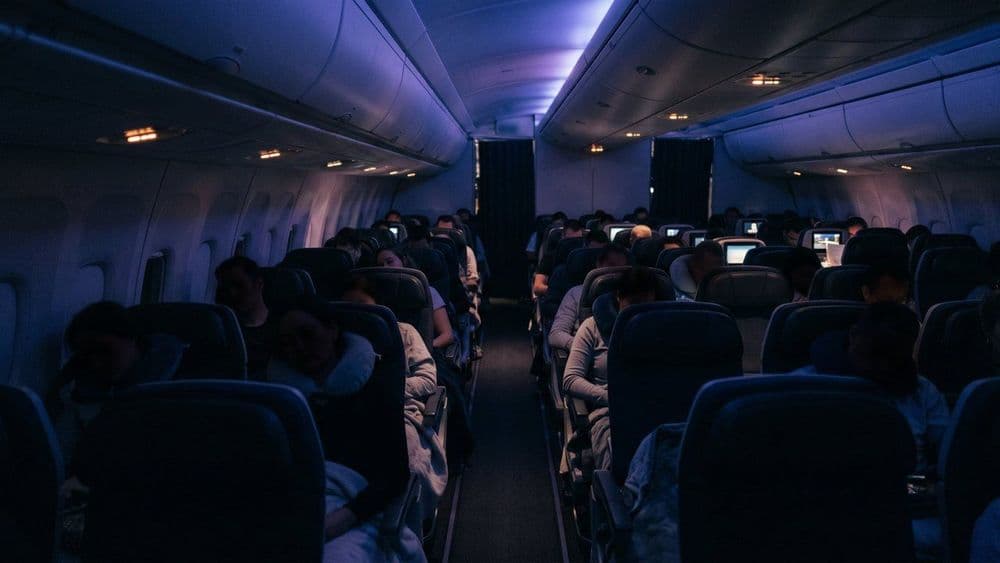
A red-eye, also known as an overnight flight, leaves late at night and lands early the next morning. You sleep on the plane instead of in a bed. In return, you get a full day at your destination and often one less hotel night to pay for.
On some trips, the hotel night you skip costs more than the flight. A typical hotel night in London, for example, costs more than a typical one-way nonstop from New York.
Where Do Red-Eyes Fly?
Red-eyes are common on some trips and rare on others. Here’s where you’re most likely to find one:
- From the western U.S. to the East Coast and Midwest: Almost all U.S. red-eyes leave from western states. Los Angeles to New York has the most red-eyes of any U.S. route, and Los Angeles to Chicago and Las Vegas to Atlanta are near the top. In June 2026, Southwest Airlines added a daily red-eye from San Diego to Boston.
- From Hawaii and Alaska to the mainland: Honolulu to Los Angeles and Anchorage to Seattle are two of the busiest red-eye routes in the U.S.
- From North America to Europe: Flights to Europe usually leave in the evening and land the next morning. Flights back from Europe usually leave around midday and land in the afternoon of the same day.
- From Asia to Europe: Long flights from Asia to Europe often leave around midnight and land around 6 a.m.
An Overnight Flight Saves You a Night in a Hotel
Flying overnight instead of the afternoon before means one less night in a hotel at your destination. This is what a typical hotel night cost for one person in ten big cities that red-eyes fly into, across four weeknights in November and December 2026:
- New York: $460
- London: $429
- Paris: $360
- Tokyo: $256
- Sydney: $219
- Dubai: $167
- Singapore: $141
- Hong Kong: $117
- Istanbul: $105
- Frankfurt: $81

What one hotel night typically cost for one person in cities red-eyes fly into, on four weeknights in November and December 2026.
You’ll often land hours before your hotel lets you check in. A few ways to fill that gap:
- Ask your hotel to hold your bags: Ask whether you can check in early too, and what it costs.
- Look for a shower at the airport: Some airports have lounges where you can pay for a shower. London Heathrow, for example, has lounges with showers in every terminal (fees apply).
- Check whether you can use an arrivals lounge: Some airlines have lounges for passengers who just landed. British Airways’ arrivals lounges at Heathrow have showers for passengers who flew in first or business class.
Is a Nonstop Red-Eye Worth the Extra Cost?
The price of a red-eye depends on the route and the date, so compare it with the daytime flights on your dates. You’ll also choose between a nonstop and a flight with a stop. On long flights between big hubs in North America, Europe, Asia, and Australia, this is how they compared in our data:
- A nonstop usually costs more: about 30% more than the cheapest flight with a stop, but it gets you there about six and a half hours sooner.
- How much more depends on where you fly: the difference was smallest across the Atlantic and biggest between Europe and Asia, where a nonstop often cost about two-thirds more.
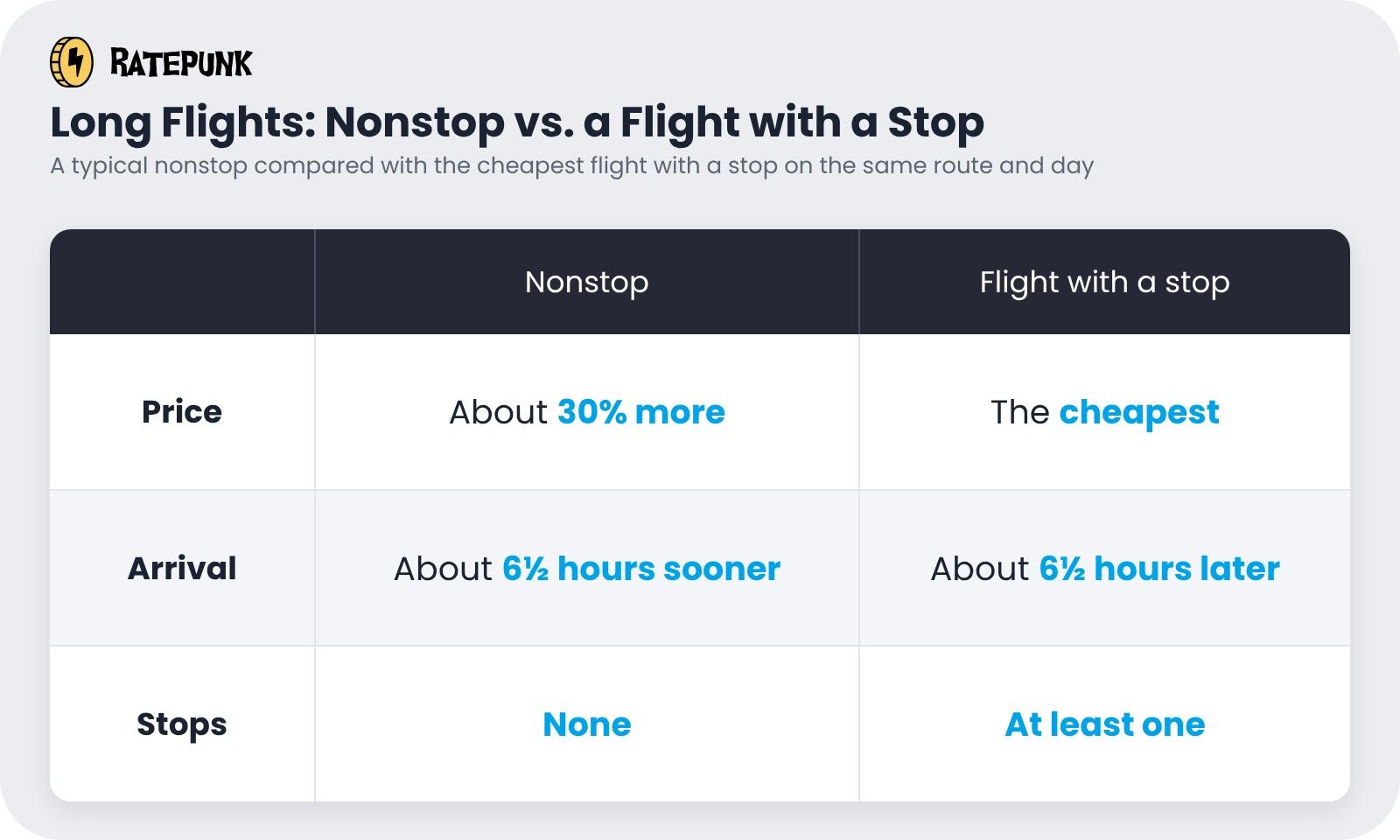
A typical long-haul nonstop compared with the cheapest connecting flight on the same route and day.
If the red-eye is a nonstop and the cheapest daytime choice has a connection, you’ll likely pay more for the overnight flight, but you’ll get there faster and skip a hotel night.
Red-Eye Pros and Cons
Here’s what you gain and what you give up with an overnight flight:
Pros:
- You skip a night in a hotel at your destination.
- You arrive with the whole day ahead of you.
Cons:
- You get a short night’s sleep in an airplane seat.
- You often land hours before your hotel lets you check in.
- On a connecting flight, you change planes in the middle of the night.
Are Red-Eye Flights More Dangerous?
Red-eyes follow the same safety rules as daytime flights, and those rules give pilots shorter workdays when their day starts at night. Here’s the longest two pilots flying one or two flights can work under the FAA’s rules on pilot duty and rest in the U.S. and the EU’s flight time limits, based on when the workday starts:
- A workday that starts between midnight and 4 a.m.: up to 9 hours in the U.S. and up to 11 hours in the EU.
- A workday that starts in the morning: up to 14 hours in the U.S. (starting 7 a.m. to noon) and up to 13 hours in the EU (starting 6 a.m. to 1:30 p.m.).
On long red-eyes, such as Singapore to London, airlines add extra pilots so they can take turns resting.
How to Pick a Red-Eye You Can Sleep On
A few choices when you book make the night easier:
- Book a nonstop, so you aren’t changing planes in the middle of the night.
- Pick a window seat, so no one needs you to get up.
- Compare prices on the same day, nonstop against the cheapest connecting flight, before you choose.
How to Sleep on a Red-Eye
These tips come from the CDC’s travel advice on sleep and jet lag:
- Bring an eye mask and earplugs.
- Go easy on alcohol and caffeine before and during the flight.
- Drink water during the flight.
- After you land from a flight heading east, get bright morning light, which will help your body adjust to the time change.
- If you nap that day, keep it to 20 to 30 minutes.
When an Overnight Flight Is Worth It
An overnight flight is worth it when the hotel night you skip and the hours you gain matter more to you than a full night’s sleep. In London, a typical hotel night costs more than a typical one-way nonstop from New York in our data, so the savings can be bigger than the price of the flight.
Before you book a red-eye, check:
- Where you’re flying: Red-eyes are easiest to find from the western U.S. to the East Coast, from North America to Europe, and from Asia to Europe.
- What a hotel night costs where you land: The pricier the city, the more you save by skipping a night there.
- How you’ll spend your first morning: You’ll arrive after a short night, so plan an easy start to the day.
- What the flight costs: If you’re looking to save money, you can use tools like RatePunk Flights to watch for price drops on routes from your airport.
Red-Eye Flight FAQ
What Is a Red-Eye Flight?
A red-eye is a flight that leaves late at night and lands early the next morning. You sleep on the plane instead of in a hotel.
What Time Is a Red-Eye Flight?
There’s no official cutoff, but red-eyes usually fly between about 10 p.m. and 7 a.m. local time. That’s the window Southwest Airlines gives for its red-eyes.
Is a 4 a.m. Flight a Red-Eye?
Usually not. A 4 a.m. departure is an early-morning flight, even though it’s still dark when you take off. A red-eye leaves the night before.
Why Is It Called a Red-Eye?
The name comes from the bloodshot eyes of passengers who don’t get much sleep. The term dates to 1968, according to the Online Etymology Dictionary.
Are Red-Eye Flights Cheaper?
Not always. The price of a red-eye depends on the route and the date, so compare it with the daytime flights on your dates.
Do Airlines Still Offer Red-Eye Flights?
Yes. United, Delta, and American fly the most red-eyes in the U.S. Southwest Airlines started flying them in 2025.
How Do You Book a Red-Eye?
Search your dates as usual, then sort the results by departure time and look for flights that leave after about 10 p.m. Check the arrival time too, since a red-eye lands early the next morning.
About the Prices
Hotel prices are from booking sites, for one adult and one night on November 3, 11, and 17, and December 2, 2026, at hotels rated 3 stars or more out of 5 with a guest rating of 3.5 or more out of 5, within 10 km of each city’s center. Each city’s price is the middle of its four nightly typical prices, collected October 13, 2026, for New York and October 15, 2026, for the other cities. Flight prices are one-way economy prices in RatePunk’s fare data on 25 long routes between hubs including New York, Los Angeles, San Francisco, Miami, London, Paris, Frankfurt, Istanbul, Dubai, Delhi, Bangkok, Singapore, Tokyo, Sydney, and Melbourne, for departures August 15 to December 15, 2026, seen 14 to 60 days ahead. Prices change often, so the ones you see may be different.
If you found this interesting, you might also enjoy these articles:
- Cheapest Day to Fly: When to Book Your Holiday Flights in 2026
- Paying Less on British Airways: Sales & Avios
- Flying Singapore Airlines for Less
About RatePunk
Reading fares and understanding what makes them move is our area of expertise, and the prices in this article come from our own flight data. We run RatePunk Flights, a paid membership that watches prices out of the airport you fly from. When a route drops well below what it normally costs, the deal shows up in your app and on your dashboard, so you can book it wherever you like, with the airline itself or a travel site you already use.
October 15, 2026